LAURA PIASTA & ANNIKA RIXEN Betula Contra-Oscilloscope
Moldavite, birch, glass lenses, wood, copper, wire, mechanical and electrical parts | 11x18x16 cm | 2011
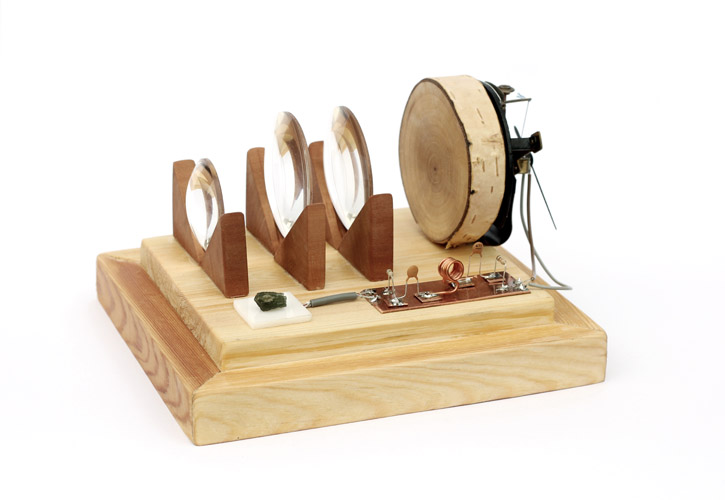
Operating Instructions: Betula Contra-Oscilloscope

1. The Betula Contra-Oscilloscope is able to extract sounds from birch trees common to the Umea region.

2.  Contra-Oscilloscopes work differently from a regular oscilloscopes in that they convert an electrical current of visually recorded objects(in this case that of birch trees) into sound signals.

3. In order to start the process of sound extraction, a birch tree is filmed. The image is projected onto screen specified as (A) in the Contra-Oscilloscope's makeup.

4. The visual information pertaining to the birch tree is now filtered through a number of glass lenses and mirrors working similar to a coffee filter - in the end, a unique sound pertaining to the individual tree is extracted through the visual cues.

5. Once extracted, the sound of the individual birch tree can now be archived and used for scientific purposes and further research on tree soundscapes. To enable the safe and archival storage of an extracted sound, an electrical current is led through wire (1.2) into a piece of moldavite rock (or something equally unique on other planets)

6. In order to ensure maximum archival quality, the moldavite rock is to be stored at 18-22 degrees, in a white cube, preferable with northern exposure.
Bg